Is it worth going to St. Emilion?
An honest, no-car answer to whether Saint-Emilion deserves a day of your Bordeaux trip: train times, walkability, costs, and the real pain points.
Is it worth going to St. Emilion?
Yes, for most travelers Saint-Emilion earns its day, and the no-car version works better here than in almost any other famous French wine region. Direct TER trains run from Bordeaux Saint-Jean roughly hourly, about 16 to 17 times daily, taking around 30 minutes, with one-way fares typically 5 to 17 EUR (checked September 2026). The old town is compact and walkable, and the village holds UNESCO World Heritage status, inscribed in 1999.
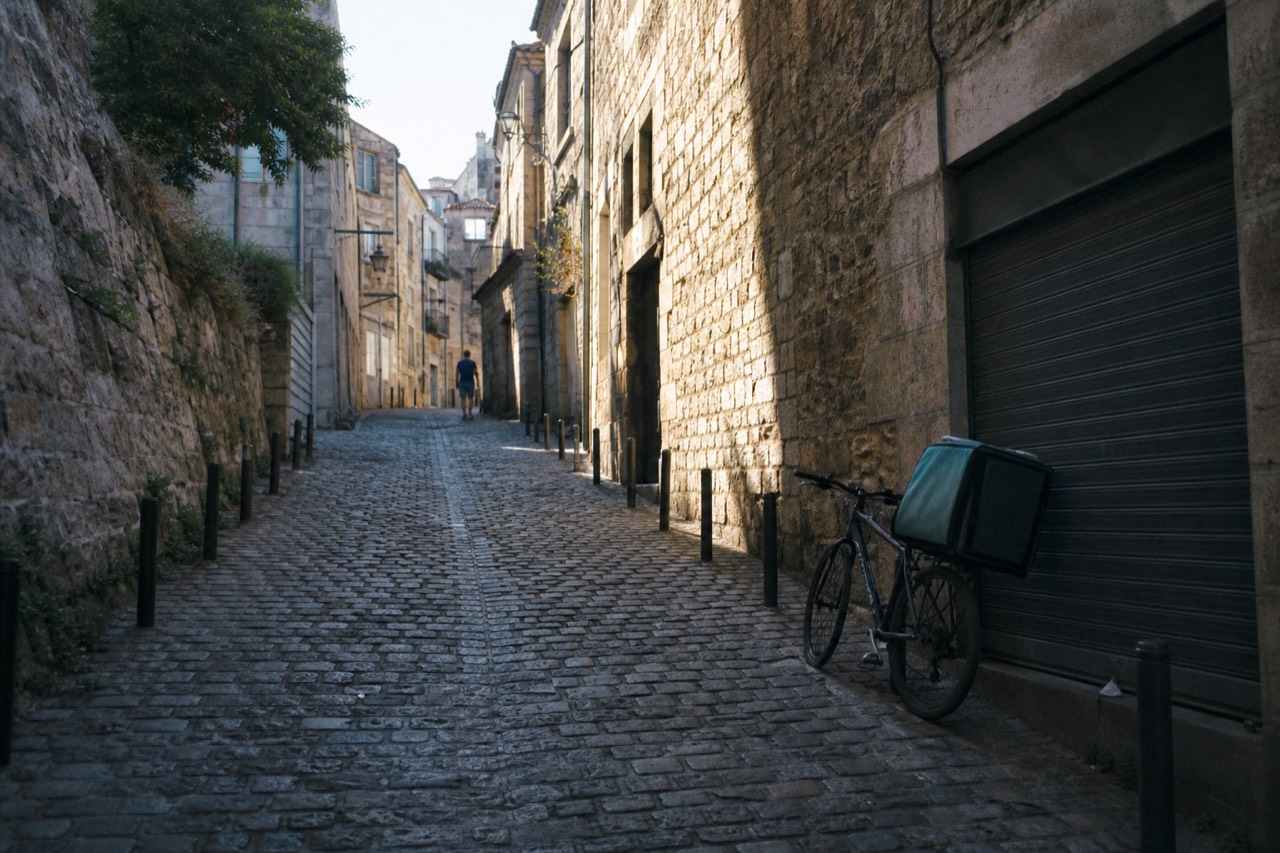
That is the short case for going. The honest version needs the caveats too, because the car-free day has one real friction point that shows up again and again in traveler discussions: the walk from the station up into the village is roughly 20 to 30 minutes, steep, and cobbled, and in summer heat it is the part of the day people complain about most. Everything else about the trip tends to land well.
The village rewards the effort. It is a medieval limestone settlement where the entire jurisdiction, vineyards included, is protected as a living cultural landscape under the exact designation "Juridiction de Saint-Emilion." The monolithic church, carved down into the rock rather than built up, is the headline sight, and the tourist office runs the official underground monuments tour for typically 11 to 15 EUR for adults, with reservation recommended in peak season (checked September 2026). Around it sits a dense little town of wine shops, terraces, and viewpoints over the vines.
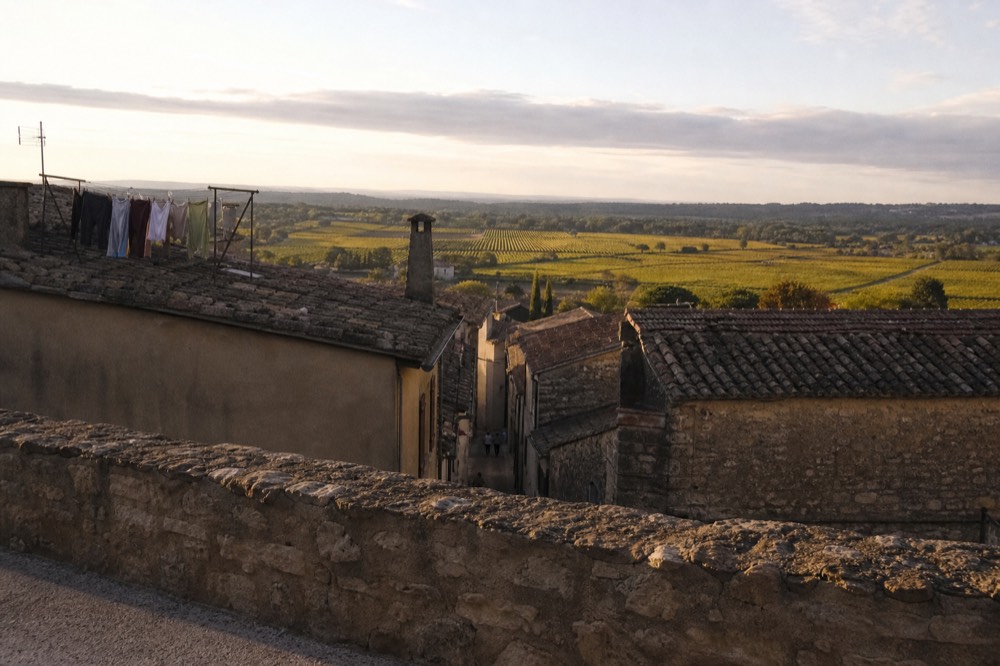
For wine, the 2022 Saint-Emilion classification, announced 8 September 2022 and valid through the 2031 harvest, names exactly 85 classified properties: 2 Premier Grand Cru Classe A estates (Chateau Figeac and Chateau Pavie), 12 Premier Grand Cru Classe B, and 71 Grand Cru Classe. You do not need a car to taste that hierarchy. Several visitable chateaux sit within reach of town, and a guided tour solves the distance question entirely.
If you want someone else to handle the logistics, these three formats cover the main ways visitors do Saint-Emilion without driving:
The electric bike option is the one that changes the calculus most for car-free visitors, and we come back to it below. First, the practical spine of the day: the train.
A few planning notes make the caveats easier to manage. That steep, cobbled climb from the station is the same route in both directions, so budget for it twice: once arriving, once heading back down to catch your return train. Wear shoes with real grip, since cobbles plus any rain become slippery, and in the hotter months it pays to take an early train so the ascent happens before midday heat builds. Travel light, because wheeled luggage and medieval stone streets are a poor match.
Inside the village, the compactness works in your favor. Because the old town is small and walkable, you can string together the monolithic church tour, a terrace lunch, and a few wine shop stops on foot without ever needing transit, and the viewpoints over the vines are reached simply by wandering to the village edges rather than by any formal trail. If the underground monuments tour is on your list, book it ahead in peak season as recommended, since a sell-out there is the one thing that can genuinely derail a single-day itinerary.
Finally, decide your format before you arrive. The guided options above, especially the electric bike tour, exist precisely to erase the one friction point of the car-free day, so if the station climb or the distance to chateaux worries you, letting someone else handle the logistics is the simplest fix.
How do you get to Saint-Emilion without a car?
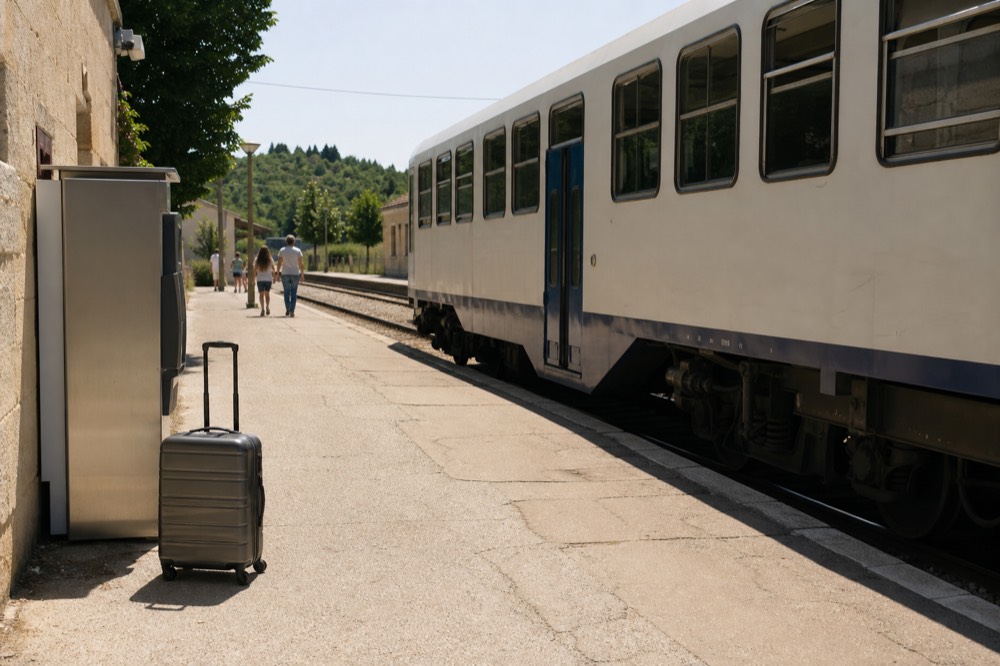
Take a direct TER train from Bordeaux Saint-Jean to Saint-Emilion station. Trains run roughly hourly, about 16 to 17 departures a day, the fastest journeys take around 29 to 32 minutes, and one-way fares typically run 5 to 17 EUR (checked September 2026). No transfer, no booking drama, no parking hunt. Driving, by comparison, is 40 to 45 km and 37 to 53 minutes from central Bordeaux.
That frequency matters more than it sounds. A roughly hourly service means a bad morning does not wreck the plan: oversleep, and you lose 60 minutes, not half a day. It also means you can leave when the village starts to empty out, or linger for a sunset glass without checking a rigid return schedule. Some services stop at Libourne en route but are still listed as direct, so do not let an intermediate stop on the timetable put you off.
The station sits below the village. From the platform, the walk up to the center takes roughly 20 to 30 minutes, uphill on partially cobbled streets where sidewalks are only partial. Fit travelers will shrug it off. Anyone with mobility issues, small children, or a hot August afternoon on their hands should budget for it honestly, or plan around it with a tour that meets you at the top or covers the ground by bike.
Drivers, for the record, do not have it easier. Parking inside the historic core is limited and much of it is pedestrianized, so self-driving visitors end up at edge lots, some around 2 EUR per hour (checked September 2026), which fill in peak season. A free peripheral lot exists near the Gendarmerie, but it fills quickly in summer too. The train is not a compromise here. It is arguably the better option.
So the day is worth it, and the train makes it easy to reach. The remaining question is what the car-free hours actually cost and feel like once you are there.
Can you see Saint-Emilion on foot once you arrive?
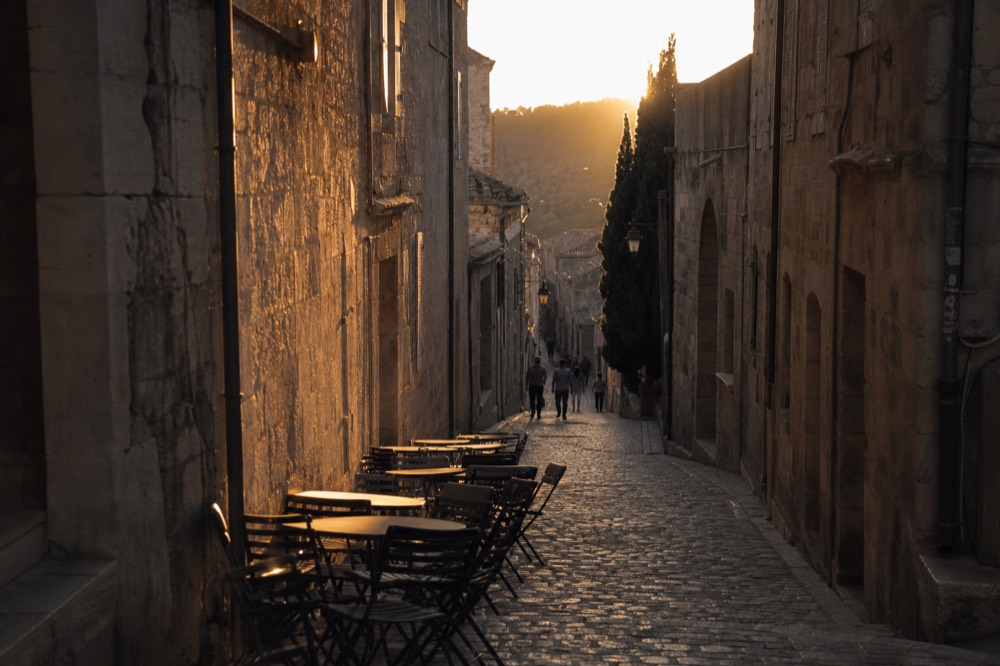
Yes, the old town itself is fully walkable, and that is Saint-Emilion's single biggest advantage over other Bordeaux day trips. The village is compact enough that the monolithic church, the collegiate cloister, the King's Tower keep, the wine shops, and the viewpoints are all within a few minutes of one another on foot. The catch is the terrain: steep, cobbled streets, and a 20 to 30 minute climb from the station to the center.
Inside the walls, no one misses a car. This is what separates Saint-Emilion from the Medoc, where the chateaux spread along an 80-plus km peninsula route and effectively require an organized tour or a driver. Saint-Emilion is a village-based experience: you walk between sights, tastings, and lunch. The Medoc is an estate-by-estate itinerary, more formal, with appointments made in advance. For a traveler without a vehicle, that difference decides the day trip before any wine is poured.
The vineyards are the part that walking alone cannot fully solve. The classified estates fan out around the village, and while a couple of chateaux are reachable on foot, a serious tasting itinerary needs wheels. That is exactly the gap the electric bike format fills, and it is the reason the full-day electric bike tour is the most-reviewed car-free option from the site's roster, with 731 reviews.
The electric assist flattens the hills that make the station walk a complaint in the first place. Riders cover the vineyard lanes between chateaux without arriving sweaty, and the format turns the "no car" limitation into the best part of the day. It is the honest answer to the one genuine weakness of arriving by train.
For a deeper comparison of the two sides of Bordeaux by car-free criteria, see our guide to Left Bank vs Right Bank Bordeaux.
What does a car-free day actually cost?
Budget roughly 10 to 34 EUR for the round-trip train (checked September 2026), 11 to 15 EUR for the tourist office's monolithic church and underground monuments tour (checked September 2026), and tasting fees that vary by estate, so check the listing before you go. Lunch in the village spans everything from a casual creperie to two Michelin-starred fine dining. A day is doable on a modest budget or a lavish one.
Here is a realistic planning table for the main pieces of a no-car day:
| Item | Typical range | Notes |
|---|---|---|
| Train, Bordeaux round trip | 10-34 EUR (checked September 2026) | Direct TER, about 30 minutes each way |
| Monolithic church tour | 11-15 EUR adult (checked September 2026) | Booked via the tourist office, reserve in peak season |
| Chateau tasting booked direct | around 25-60 EUR (checked September 2026) | Fonroque from around 25 EUR, Pavie from around 60 EUR |
| Casual lunch | creperie tier | La Creperie du Parvis, budget-friendly |
| Upscale lunch | mid to star tier | La Table 38 mid-range, Logis de la Cadene 1 Michelin star |
The wide spread is the point. Two people can spend a full day here quite cheaply, or several times as much if lunch is a Michelin-starred affair followed by a Premier Grand Cru Classe A tasting. Neither version feels like a mistake, and neither requires a car. The train fare is fixed, the monuments tour is fixed, and the only genuinely variable line is how much wine you decide to taste.
If you would rather bundle the logistics, a half-day small-group tasting tour is the other popular car-free format, meeting you in or near the village and handling the chateau visits:
For restaurant planning, our piece on where to eat in Saint-Emilion before and after a wine tour breaks down the village's tables by tier. The short version: high review volumes at the top spots make booking ahead the safer bet in peak season, since no sourced consensus confirms walk-ins are easy when the village is full.
What are the honest downsides of the no-car day?
Three things: the uphill station walk, peak-season crowds, and the fact that the surrounding vineyards are genuinely hard to reach on foot alone. None of these is a reason to skip Saint-Emilion, but all three are reasons to plan around them. A tour with transport, an electric bike, or a willingness to book ahead solves most of it.
The station climb is the most-cited complaint in traveler discussions, and it deserves plain language. Roughly 20 to 30 minutes uphill, steep in stretches, cobbled, with partial sidewalks. In July and August heat, that is a real cost. The counterweights: it is once per arrival, the village at the top is flat enough, and an e-bike or a tour that meets you up top erases it.
Crowds are the second. A UNESCO village 30 minutes from a major city fills up, especially in summer, and the official monuments tour recommends reservation in peak season for good reason. Arriving on an early train, or on a weekday, buys you the village before the midday wave. The tourist office keeps daily hours of roughly 10:00 to 18:00 in season, with shorter hours from November, so late-season visitors should check times before planning an evening.
The third is the one that surprises people: the wine region is bigger than the village. Eighty-five classified properties surround the town, and walking reaches only a fraction of them. A no-car visitor who plans only the village will have a lovely day and taste less wine than they expected. That is the strongest argument for spending part of the day on an organized format.
So is the day trip worth it? The verdict
For the large majority of visitors, yes, and the car-free version specifically is worth it. The train is fast, frequent, and cheap; the village is one of the most walkable wine destinations in France; and the one real weakness, reaching the vineyards without wheels, is solved by the same tours that make the day better anyway. Travelers who should think twice are those with serious mobility limits, due to the station climb.
The pattern that works: take an early direct train, do the underground monuments tour when the village is still quiet, spend the middle of the day on a bike or small-group tasting format that reaches the chateaux, and finish with a late terrace glass before an evening train back. That is a full, well-shaped day, and none of it requires a car. It is the itinerary the team behind Saint Emilion Wine Tours recommends most often to first-time Bordeaux visitors.
The pattern that disappoints: arrive at noon in August, climb the hill in the heat, wander the crowded center, buy a bottle, leave. The village alone is charming but small, and the travelers who rate Saint-Emilion a "nice but overrated" stop are usually the ones who never got out into the vines. For the fuller case on that, see our best wineries and chateaux in Saint-Emilion guide.
Whether you go fully independent or let a tour carry the logistics, the trio below covers the three most popular ways to spend the day:
These are the questions car-free visitors ask most, answered with the same figures used throughout this guide: train frequency and fares, the station walk, tasting costs, and whether a tour is needed to reach the wineries. Each answer stands alone, so skim the ones that matter to your plan.
Common questions about visiting Saint-Emilion without a car
Is it worth going to St. Emilion?
Yes for most travelers. The village is a UNESCO World Heritage site 30 minutes from Bordeaux by direct train, the old town is fully walkable, and the surrounding classified vineyards are accessible through bike and small-group tours. The main caveats are the uphill 20 to 30 minute walk from the station and peak-season crowds.
Can you get to Saint-Emilion without a car?
Yes. Direct TER trains run from Bordeaux Saint-Jean roughly hourly, about 16 to 17 times daily, taking around 30 minutes, with one-way fares typically 5 to 17 EUR (checked September 2026).
Is Saint-Emilion walkable once you arrive?
The old town is compact and walkable, with the main sights within minutes of one another. The catch is the climb from the station up to the center: roughly 20 to 30 minutes, steep and cobbled in places.
Do you need a tour to visit the wineries without a car?
You can reach a couple of chateaux on foot, but the classified estates spread widely around the village. An electric bike tour or a small-group tasting tour is the standard way car-free visitors reach them, and both meet you in or near the village.
How much does a car-free day in Saint-Emilion cost?
Plan on roughly 10 to 34 EUR for the round-trip train, 11 to 15 EUR for the official monolithic church tour, and tasting fees that vary by estate, so check the listing before booking (all figures checked September 2026). Lunch ranges from creperie prices to Michelin-starred dining.